
Blot fresh messes with white towels, treat urine or vomit with an enzymatic cleaner, and never use heat or steam until the stain is fully broken down. Enzymes dissolve the uric acid crystals that cause lingering odour, while heat sets the proteins permanently into the fibres. Once accidents are frequent, odours persist, or contamination has reached the padding, professional hot water extraction is the method that actually solves the problem instead of masking it.
TL;DR:
- Enzymatic cleaners must be applied thoroughly and left undisturbed for the full dwell time before blotting to effectively break down uric acid crystals and eliminate odours.
- Hot water extraction reaches deep into carpet fibres and padding, making it necessary for persistent stains or odours that DIY methods cannot fully resolve.
- Regular vacuuming, grooming pets, and using entrance mats prevent buildup of dander and reduce the frequency of deep cleanings needed.
- Signs that indicate the need for professional cleaning include recurring odours, stains reaching the padding, or contamination visible under UV light.
- Professional pet carpet cleaning involves targeted enzyme pre-treatments followed by thorough hot water extraction, offering better results for longstanding or deep contamination.
Table of Contents
- Emergency checklist for accidents (first 10 to 60 minutes)
- Hot water extraction or dry cleaning: which suits pet homes?
- How do you remove pet stains without ruining the carpet?
- How often should you vacuum and clean carpets with pets?
- When should you call a professional carpet cleaner?
- Dealing with vomit, faeces, and other accidents
- Why professional pet cleaning outperforms most DIY fixes
- Book a pet-friendly carpet clean with Cleanny
- Sources
- FAQ
Emergency checklist for accidents (first 10 to 60 minutes)
Speed matters more than force here. Uric acid crystals bond to carpet fibres and padding as urine dries, which is why the first hour after an accident decides how easy the stain will be to shift later.
- Blot firmly with clean, white towels. Press down and lift rather than rubbing, which only pushes the mess deeper into the pile.
- Change towels as they saturate and keep going until the area is only faintly damp.
- Apply an approved enzymatic cleaner following the label's instructions, then leave it for the full dwell time before blotting again. Rushing this step is the single most common reason DIY treatments fail.
- Use cold water for dilution only if the product instructions call for it. Skip heat, steam, ammonia, and bleach entirely.
- If the patch is large, or a smell keeps returning after treatment, stop experimenting. Repeated DIY attempts on the same spot risk setting the stain rather than lifting it, and that's when it's worth booking a professional.
Hot water extraction or dry cleaning: which suits pet homes?
The honest answer depends on what you're treating, not personal preference. Routine upkeep and dry, low-moisture methods pair well together. Deep odour, staining, or anything that has reached the padding needs hot water extraction.
- Hot water extraction forces heated water and cleaning solution deep into the pile, then pulls it back out with high-suction equipment. That flush reaches dander, biological soils, and odour sitting below the surface, which is exactly the layer pet homes struggle with most.
- Low-moisture and dry methods clean the surface fast and dry within an hour or two, which suits homes needing a quick refresh between deeper cleans. Their limitation is penetration. They rarely reach soil that has worked into the backing, and some formulations can leave a residue that acts as a dirt magnet once dry.
- Rental machines handle light, fresh spots reasonably well if you're consistent with technique. They rarely generate the suction or water temperature that a truck-mounted or waterclaw system achieves, so embedded contamination usually survives a DIY pass.
A simple rule of thumb: general maintenance and light traffic areas are fine with low-moisture cleaning. Persistent odour, visible staining, or any suspicion that padding is affected calls for hot water extraction, ideally from a professional with the right equipment.
How do you remove pet stains without ruining the carpet?
Enzymatic cleaners work by breaking down the protein and uric acid compounds in urine, vomit, and saliva into substances that no longer smell or attract bacteria. The process only works if you follow it properly: saturate the stained area so the enzymes reach as deep as the contamination went, let it sit for the dwell time stated on the bottle (often 10 to 15 minutes, sometimes longer for old stains), then blot dry. Repeat for anything that has had time to set.
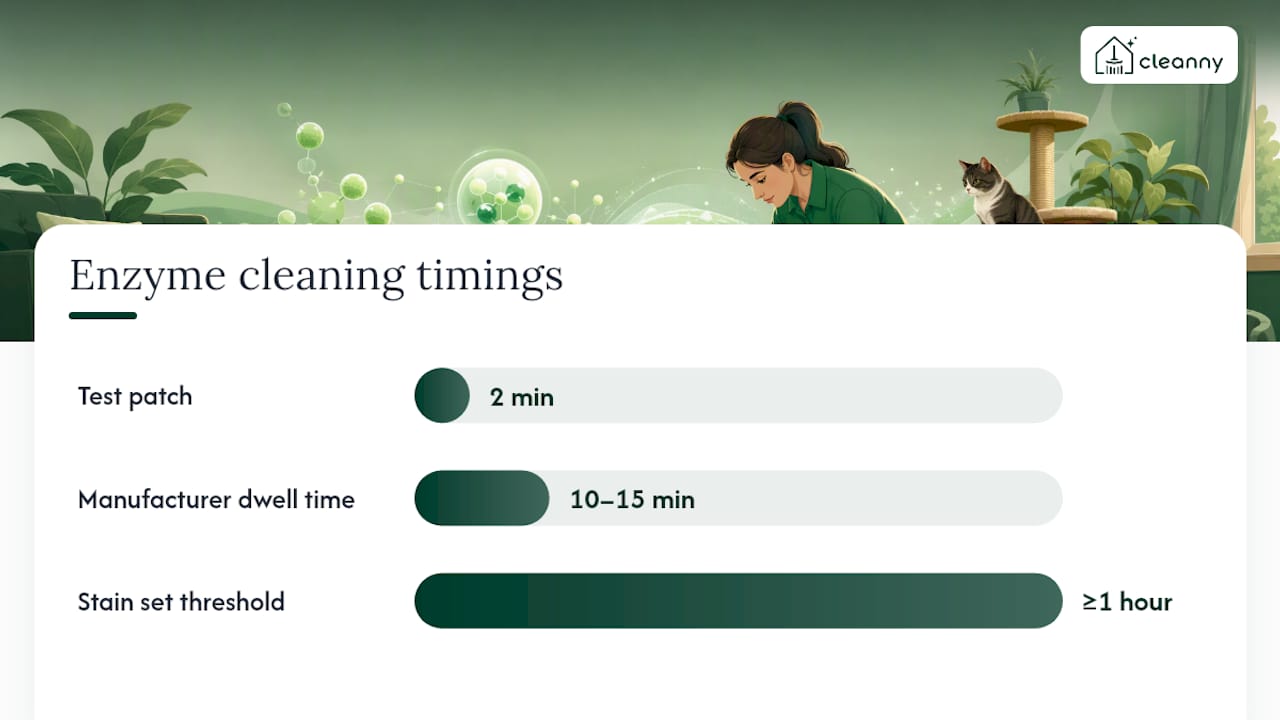
Test any product on a hidden corner first, particularly on wool, silk, or other natural fibres, which can discolour or react differently to synthetic carpet. This takes two minutes and saves you from turning a small stain into a visible bleach mark.
One warning worth repeating: heat or steam applied before an enzyme treatment can permanently set protein stains into the fibres, making later removal far harder. Always treat, then extract, never the reverse order.
- Skip bleach and ammonia. Both are risky around pets, can react badly with enzymatic products, and often intensify rather than remove the odour.
- Never mix cleaning products, even ones that seem compatible.
- Diluted white vinegar can work as a temporary odour fix in a pinch, but use it sparingly and never as a substitute for a proper enzyme treatment on urine.
Pro Tip: Keep a dedicated enzyme cleaner under the sink rather than buying one after the accident happens. Cold, fresh urine lifts far more easily than anything left to dry for even an hour.
How often should you vacuum and clean carpets with pets?
Daily habits do more heavy lifting than most owners assume. Preventive routines such as regular vacuuming, grooming, and entrance mats are often as effective as squeezing in an extra deep clean, according to carpet cleaning specialists.
- Vacuum high-traffic and pet-favourite areas daily or several times a week, using slow, multi-directional passes to lift embedded hair rather than skimming the surface.
- Empty the canister or replace the bag often. A full vacuum loses suction fast, and dander builds back up on the pile within days.
- Groom pets regularly and wash their bedding weekly to cut down on loose hair and dander before it ever reaches the carpet.
- Place absorbent mats by doors, keep paw wipes handy, and consider washable rugs in feeding areas so spills never touch the carpet directly.
- Stain-protection treatments can help repel fresh spills, though they wear down with foot traffic and need reapplying periodically. They're a helpful buffer, not a substitute for prompt cleanup.
When should you call a professional carpet cleaner?
Certain signs mean DIY has reached its limit. Persistent odour after correct treatment, accidents recurring in the same spot, contamination that glows under UV light, or any sense that liquid has soaked into the padding are all reasons to bring in a professional rather than keep experimenting.
A proper pet-specialist clean typically follows this order:
- Inspection, including a UV check to find contamination invisible to the eye and questions about how long stains have been present.
- Targeted enzyme pre-treatment on affected areas, given time to work before any water touches the carpet.
- Hot water extraction across the treated area, and sub-surface extraction where the padding itself is contaminated.
- Grooming and a drying plan to prevent the residue re-soiling problem that can follow an incomplete rinse.
Worth asking any cleaner: do they use enzyme pre-treatment, can they perform sub-surface extraction if needed, what are realistic drying times, and is there a guarantee if odour returns? The CRI-205 guidance from the Carpet & Rug Institute is a useful benchmark, covering exactly these inspection questions and recommended professional practices.
On frequency, Martha Stewart's cleaning guidance suggests professional cleaning every 3 to 12 months for pet households, with multiple pets, heavy shedding, or high foot traffic pushing you toward the shorter end of that range.
Dealing with vomit, faeces, and other accidents
Urine gets most of the attention, but vomit and faeces bring their own problems. Vomit often contains bile and stomach acid, which can discolour carpet fibres quickly if left to sit, so scrape up solids with a spoon or stiff card before any liquid touches the area. Blot rather than rub, then treat with the same enzymatic approach used for urine. Bile stains sometimes need a second application, since the acid content can be stubborn even after the first treatment appears to have worked.
Faeces should be removed as completely as possible before any cleaning starts. Lift solid matter with a disposable bag or paper towel, working from the outside of the mess inward to avoid spreading it further into the pile. Once the solids are gone, treat the residual mark exactly as you would a fresh urine stain: blot, apply enzyme cleaner, allow full dwell time, then blot again.
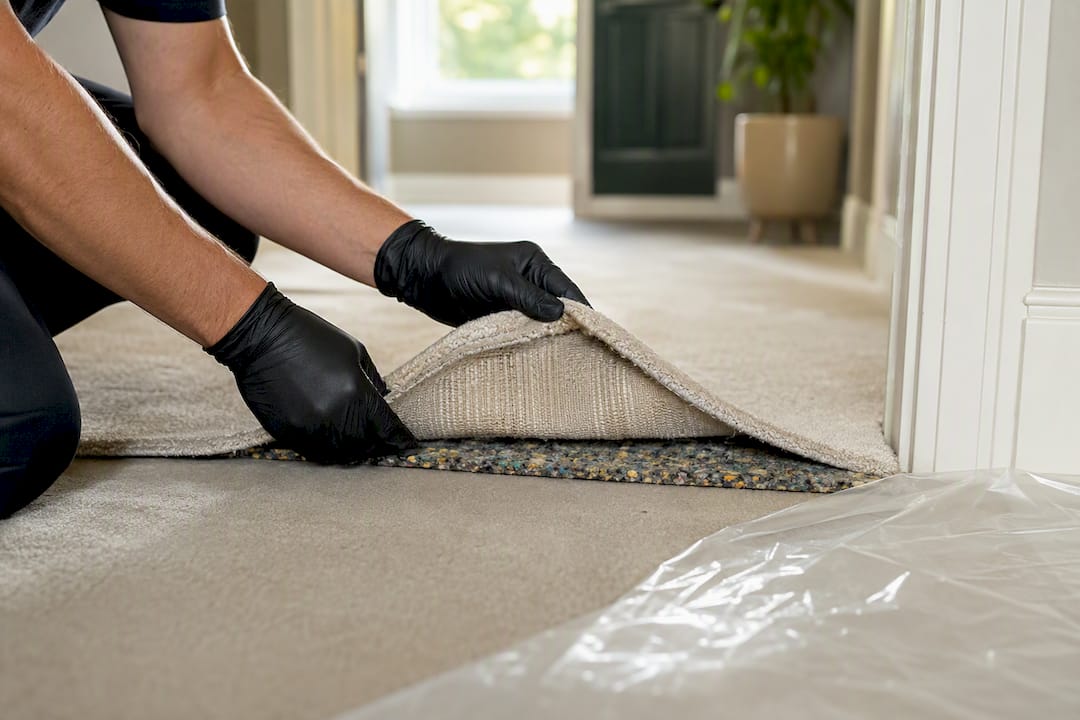
Both types of mess carry a higher bacterial load than urine, so gloves are worth wearing, and the area should be ventilated while it dries. If a carpet has taken repeated vomit or faecal accidents, particularly from an unwell or ageing pet, it's worth having padding checked for contamination even if the surface looks clean. Professional cleaning can also help clear flea dirt, eggs, or larvae that accumulate in carpet fibres, though it works alongside veterinary flea treatment rather than replacing it.
Why professional pet cleaning outperforms most DIY fixes
Most pet owners treat carpet cleaning as damage control. It works better as a system: fast triage for accidents, enzyme treatment done properly, and hot water extraction on a schedule rather than only in emergencies. The households that get this right rarely deal with the deep, mystery odours that plague everyone else.
Cleanny's approach follows that same order of operations, because it's the order that actually works, not because it looks thorough on paper. Every clean is booked through an online platform with upfront pricing shown before you commit, so there's no guessing what a carpet job will cost once the van arrives. The professionals carrying it out are background checked and use eco-friendly products, backed by a re-clean guarantee if the result falls short. Alongside carpet cleaning, the same standard extends to upholstery and full deep cleans, which matters in pet homes where odour rarely stays confined to the floor.
— CLEANNY
Book a pet-friendly carpet clean with Cleanny
Pet owners have an alternative to guesswork and rental machines that never quite finish the job. The cost is visible before booking, professionals arriving may be vetted and insured, and many jobs include a re-clean guarantee if odour or staining comes back.

Booking follows the same order of operations covered above: enzyme pre-treatment on affected areas, then hot water extraction to flush what's sitting deeper in the pile and padding. It suits homes managing regular accidents just as well as those simply overdue a deep clean. Check the carpet cleaning page for what's included, or head straight to the booking page to get a price and pick a slot that works. If odour has spread beyond the carpet, Cleanny's full range of services covers upholstery and deep cleans in the same visit.
Sources
- Best carpet cleaning method for homes with pets - Hobbs Cleaning Ltd
- How often should you clean carpet? (Martha Stewart)
FAQ
How often should you clean carpets if you have pets?
Vacuum pet-heavy areas daily or several times a week, and schedule a professional deep clean every 3 to 12 months depending on the number of pets and how much traffic the carpet sees, according to Martha Stewart's cleaning guidance. Homes with multiple pets or heavy shedders generally sit toward the shorter end of that range.
Will professional carpet cleaning remove pet urine?
Yes, when it follows the right order: enzyme pre-treatment to break down the uric acid, followed by hot water extraction to flush residue from the fibres and padding. Old, deeply set stains sometimes need sub-surface extraction if contamination has reached the backing.
Is carpet cleaner toxic to pets?
Some conventional carpet cleaners contain ammonia, bleach, or harsh solvents that can irritate a pet's skin, paws, or airways, so checking the label matters. Enzyme-based cleaners are generally the safer, more effective choice for pet households and are what most professional cleaners use as standard.
What is the best carpet cleaner when you have pets?
For fresh urine, vomit, or faeces, an enzymatic cleaner applied with the correct dwell time is the most reliable fix. For deep, recurring odour or contamination that has reached the padding, professional hot water extraction from a vetted service like Cleanny outperforms both dry methods and rental machines.