
Most UK cleaners charge between £15 and £25 an hour, with self-employed operators clustering around £18 to £22 and agencies pricing higher, typically £25 to £40, once insurance and management costs are folded in. The gap comes down to two things: whether you're booking an individual or a company, and whether the job is a regular top-up clean or a one-off deep clean. Location moves the numbers too, with London and the South East sitting above the rest of the UK. Cleanny prices its regular domestic cleans from £18 per hour across London, Reading, Oxford and Cambridge.
TL;DR:
- Independent cleaners usually charge between £15 and £22 per hour, while agency prices often range from £25 to £40, depending on added management costs.
- Flat rates for deep cleans and end-of-tenancy jobs typically fall between £120 and £350, influenced by property size, condition, and urgency.
- Location significantly impacts prices, with London and the South East costing more due to higher wages, parking fees, and demand levels.
- Always verify whether quotes include VAT, supplies, and minimum booking lengths, as these factors affect the true cost of cleaning services.
- The upcoming national minimum wage increase to £12.71 per hour in April 2026 will influence agency pricing, especially for directly employed cleaners.
Table of Contents
- Average cleaner hourly rates: UK bands and quick examples
- What drives the price: the key cost factors
- Typical rates by job type: maintenance, deep clean, end-of-tenancy, Airbnb
- Regional differences: how location changes the price
- How to compare cleaning quotes and spot red flags
- Pricing models explained: hourly, flat, and per-room
- What the 2026 National Living Wage rise means for cleaner rates
- Publisher perspective: how Cleanny approaches pricing and quality
- Check exact prices and book a Cleanny clean today
- Sources
- FAQ
Average cleaner hourly rates: UK bands and quick examples
The clearest way to think about cleaner hourly rates is as three overlapping bands rather than one number. Independent, self-employed cleaners typically sit at £15 to £22 an hour. Agencies and platforms tend to run £22 to £40, with the extra covering insurance, vetting, and a replacement if your usual cleaner is off sick. Average domestic cleaner rates across the UK for 2026 fall between £17 and £25 an hour, which lands roughly in the middle of both bands and gives you a sensible number to test any quote against.
Turning that into real bookings helps more than the raw range does:
- A 3-hour weekly clean charged at a mid-range hourly rate comes to a moderate total per visit, resulting in a typical monthly cost based on weeks.
- A one-off deep clean often gets quoted as a flat job rather than by the hour, and typically runs £120 to £300 depending on property size and how much grime you're dealing with.
- End-of-tenancy cleans usually cost several hundred pounds, scaling with the property's size and specific cleaning requirements.
Two details change what those numbers actually mean for you. First, check whether the quote includes VAT and cleaning supplies, or adds them on top; a £20 hourly rate that excludes VAT is not the same deal as £20 fully inclusive. Second, almost every provider sets a minimum booking length, commonly two to three hours, because travel time and admin have to be paid for regardless of job size. A tiny flat might get offered a flat fee instead of a short hourly slot for exactly this reason.
What drives the price: the key cost factors
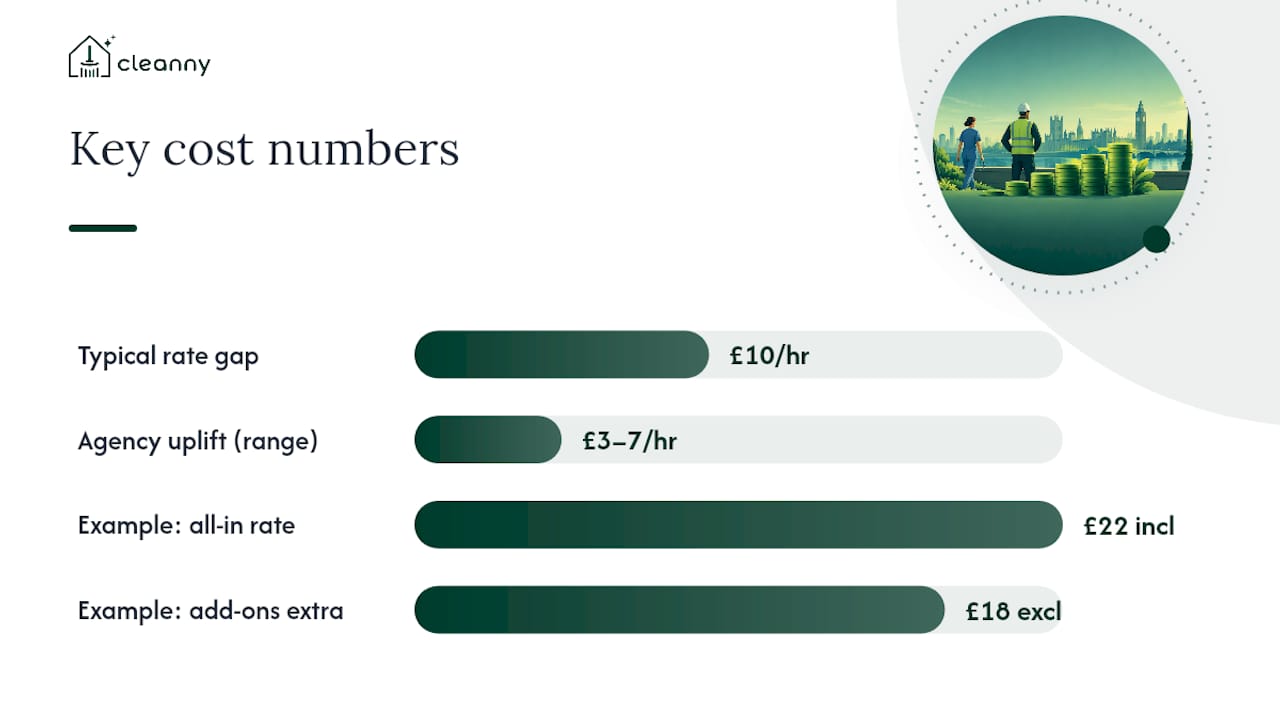
Two identical-looking quotes for the same three-bedroom house can differ by £10 an hour or more, and it's rarely random. Property size and condition set the baseline: a lived-in family home with pets takes longer than a tidy flat, and a first clean after months of neglect always costs more than a maintenance visit.
Frequency matters just as much. Regular weekly or fortnightly bookings are usually cheaper per visit because the cleaner already knows the layout and works faster, while one-off jobs take longer from a cold start and get priced accordingly.
The rest of the variation comes from:
- Postcode and local demand — busier, higher-cost areas push rates up regardless of the job itself.
- Supplier type — self-employed cleaners keep more of the hourly rate, while agency rates commonly build in £3 to £7 an hour for management, insurance, and cover staff.
- Specialist extras — oven interiors, carpets, and upholstery often carry their own line item rather than being folded into the standard rate.
- Timing surcharges — evenings, weekends, and bank holidays typically attract a premium of a few pounds an hour.
Pro Tip: Ask every provider whether their quote is inclusive of VAT and supplies before comparing numbers side by side. A £22 rate that already covers both can work out cheaper than an £18 rate that adds them separately.
Typical rates by job type: maintenance, deep clean, end-of-tenancy, Airbnb
Not every clean deserves the same price, and knowing which category you're booking makes a real difference to your budget.
- Regular maintenance cleans. These sit at the lower end, roughly £15 to £22 an hour, because the cleaner is topping up a home that's already reasonably tidy. Booking weekly or fortnightly, rather than as one-offs, is the single biggest lever for keeping the per-visit cost down.
- Deep cleans and one-off jobs. Expect a premium over maintenance rates, often priced as a flat job between £120 and £300 rather than by the hour, since scrubbing years of buildup out of a kitchen simply takes longer than a routine tidy.
- End-of-tenancy and Airbnb turnovers. These typically run £150 to £350 flat for end-of-tenancy work, with Airbnb turnarounds priced similarly but often carrying an urgency surcharge when the booking needs completing within a tight same-day window between guests.
- Commercial and office cleaning. Pricing here usually reflects square footage and out-of-hours access rather than a simple hourly figure, and contracts tend to be quoted per visit or per month once the scope is agreed.
Cleanny's deep cleaning service starts from £135 as a one-off, which sits comfortably within the flat-fee range most providers quote for this kind of job.
Regional differences: how location changes the price
London and the South East sit above the rest of the country on almost every measure, and it isn't just landlord markup. Higher wages, parking and congestion charges, and simply denser demand for cleaners all feed into the hourly figure. City-level data consistently shows London running above the national average, while many northern towns and rural areas price noticeably lower.
Property pricing pressures aren't unique to cleaning, either. Anyone who has checked EPC costs in London will recognise the same pattern: London-based services routinely cost more than identical work elsewhere in the UK, purely because of where they're delivered.
A few things worth checking when you're comparing quotes across areas:
- Ask whether travel time or a call-out charge is added separately, especially if you're outside a cleaner's usual patch.
- Compare like-for-like job types, since a £25 rate in central London for a maintenance clean isn't directly comparable to £18 in a smaller town for the same job.
- Factor in parking costs where they apply. A cleaner paying for a permit or meter in a city centre will usually pass that on somehow, whether as a line item or folded into the rate.
How to compare cleaning quotes and spot red flags
A hurried comparison based on the headline number alone is how people end up disappointed. Run every quote through the same checklist before you commit.
Confirm what's actually included:
- Does the rate cover VAT, or is it added afterwards?
- Are cleaning products and equipment supplied, or do you need to provide them?
- What's the minimum booking length, and does it suit the size of your home?
- What happens if you need to cancel or reschedule, and how much notice is required?
Then check the provider itself. Ask for proof of insurance and confirm whether staff have had a DBS check, particularly if you'll be handing over keys or won't be home during the clean. A rate that sits well below the local band is worth treating with caution: unusually cheap pricing can point to missing insurance, no background checks, or informal arrangements that leave you with little recourse if something goes wrong or gets damaged.
Pro Tip: Treat your first booking as a trial. Note how thorough the clean is against the time spent, and whether the cleaner sticks to what was agreed. A provider confident in their work will usually offer some form of guarantee if you're not satisfied.
Pricing models explained: hourly, flat, and per-room
Which pricing structure suits you depends on the job, not just personal preference.
- Hourly pricing works well for ongoing, predictable maintenance where the scope barely changes week to week. It becomes less fair on messy one-off jobs, where an unexpectedly dirty oven or years of grime can stretch the clock without you knowing in advance what the final bill will be.
- Flat, per-job pricing gives certainty for deep cleans, end-of-tenancy work, and Airbnb turnovers, where you want a fixed number before booking rather than an open-ended hourly estimate. It also removes any temptation to work slowly to stretch billable time.
- Per-room pricing suits larger homes where some rooms need far more attention than others, letting you pay for what's genuinely required rather than an averaged hourly rate across the whole property.
Whichever model you're offered, check the minimum booking policy attached to it. A two-hour minimum at £20 an hour means £40 is the floor cost regardless of how quickly the job actually gets done, so weigh that against a flat quote for the same brief before deciding.
What the 2026 National Living Wage rise means for cleaner rates
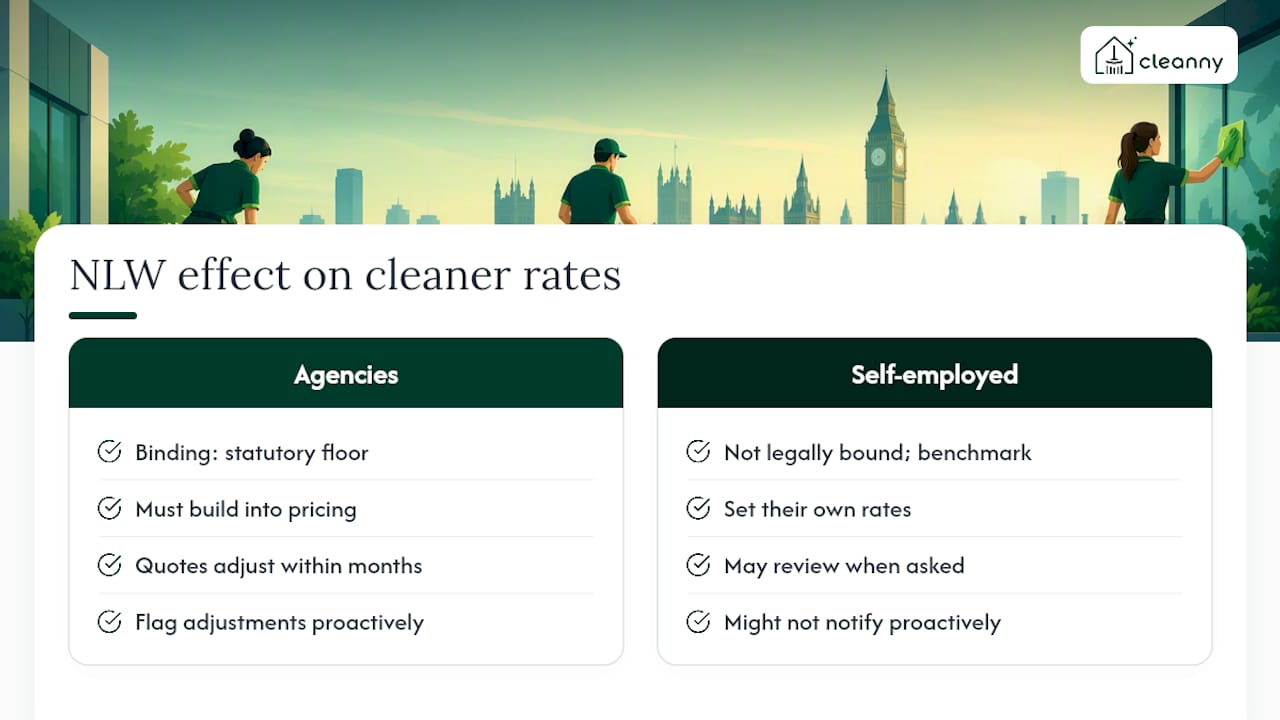
From April 2026, the National Living Wage for workers aged 21 and over rises to £12.71 an hour. That's a statutory floor, not a market rate, but it still shapes what you'll pay. Agencies employing cleaners directly need to build the new wage floor into their pricing to stay compliant, and that pressure typically shows up in quotes within a few months of the change taking effect rather than instantly.
Self-employed cleaners aren't bound by the NLW in the same way, since they set their own rates, but many track it as a benchmark for what's reasonable to charge. If your regular cleaner or agency hasn't mentioned a price review, it's worth asking directly whether the April uplift affects your booking, and when any change will apply. Providers that quote transparent, upfront pricing tend to flag adjustments proactively rather than leaving you to spot it on an invoice.
Publisher perspective: how Cleanny approaches pricing and quality
We built Cleanny's booking platform around one frustration: quotes that shift after the fact. Prices are shown upfront before you book, professionals are vetted and insured, and every clean uses eco-friendly supplies backed by a re-clean guarantee if something's missed. Across London, Reading, Oxford and Cambridge, that means you know the total cost in advance, not after a cleaner has walked through your door and reassessed the job.
— CLEANNY
Check exact prices and book a Cleanny clean today
Comparing hourly rates across independent cleaners and agencies takes time, and even then you're often left guessing what the final invoice will include. Cleanny skips that guesswork by showing you the exact price before you book, whether that's a domestic clean from £18 an hour or a deep clean from £135, with VAT, supplies, and insurance already accounted for.

Some cleaning professionals are vetted and insured, may use eco-friendly products, and may offer a re-clean guarantee if the standard isn't right first time. If you're weighing up an end-of-tenancy deadline, a post-renovation clean-up, or just want a reliable weekly slot, you can check availability and book online in a couple of minutes, with the price confirmed before you commit.
Sources
- The national minimum wage in 2026
- How Much to Charge for Cleaning: UK Pricing Guide | Hey Jodie
- Domestic Cleaner Rates: A Guide to Pricing and Value
FAQ
How much should you pay a cleaner per hour in the UK?
Most households pay £15 to £25 an hour for a self-employed cleaner, or £25 to £40 through an agency, with the difference reflecting insurance, vetting, and cover for sickness or holiday. Cleanny's domestic cleans start from £18 per hour across its London, Reading, Oxford and Cambridge coverage.
Is £20 an hour a lot for a cleaner?
No, £20 an hour sits comfortably within the typical UK range and is broadly in line with the middle of most independent cleaners' pricing. It's a fair rate for a standard domestic clean, though location and whether VAT or supplies are included can shift the value either way.
What is the minimum hourly rate for a cleaner?
There's no single legal minimum specifically for cleaning rates, but any employed cleaner must be paid at least the National Living Wage, which rises to £12.71 an hour from April 2026 for workers aged 21 and over. Self-employed cleaners set their own rates, though most price well above that statutory floor once travel and admin are factored in.
How much is a 1 hour clean?
A single hour with an independent cleaner typically costs £15 to £25 depending on location, though most providers set a minimum booking of two to three hours rather than offering a genuine one-hour slot. That minimum exists because travel time and setup have to be covered regardless of how short the job is.