
Housekeeping is ongoing household management, while cleaning services are task-focused visits. A housekeeper handles the daily rhythm of a home, from laundry to tidying to small errands, usually on a retained or live-in basis. A cleaner comes for a set slot, a one-off deep clean or a specific job like an end-of-tenancy turnaround. Busy families with layered needs tend to suit housekeeping, while most households and renters do better with a scheduled or one-off professional clean.
TL;DR:
- Housekeeping involves ongoing household management tasks like laundry, errands, and tidying, typically on a retained or live-in basis, while cleaning services focus on scheduled or one-off specific jobs.
- Regular cleaning is usually booked weekly or fortnightly with fixed time slots or job-based pricing, whereas housekeeping models vary from daily presence to part-time arrangements depending on household needs.
- Standards and safety in cleaning are guided by outcome-based criteria and colour-coded equipment, especially important for households with higher hygiene requirements like children or elderly residents.
- The decision between housekeeping and cleaning depends on household routines and budget, with many households opting for a hybrid approach combining both services.
- Booking platforms now offer instant online scheduling with upfront prices, vetted professionals, eco-friendly options, and guarantees, simplifying the process of arranging both types of household help.
Table of Contents
- What housekeeping covers: duties, models and time commitment
- What cleaning services cover: regular, one-off and specialist cleans
- Key differences explained: scope, frequency, training and cost
- Who benefits from each option: a scenario-led decision guide
- How to hire: a practical checklist and questions to ask
- Standards and safety: UK guidance that affects what to expect
- Typical frequency and time commitment
- Regional and cultural variations in what these terms mean
- How technology changes cleaning and housekeeping efficiency
- A publisher's view on choosing between the two
- How we can help with your next clean
- FAQ
- Sources
What housekeeping covers: duties, models and time commitment
Housekeeping is less about a single task and more about keeping a household running. It typically stretches across tidying, laundry, bed-making, light organisation and small errands such as restocking supplies or taking in deliveries. The work is ongoing rather than a one-off job, which is why housekeepers are usually retained rather than booked per visit.
Common duties include:
- Daily or near-daily tidying and bed-making
- Laundry, ironing and linen changes
- Light organisation of cupboards, wardrobes and shared spaces
- Errands such as grocery top-ups or receiving deliveries
- Basic household admin, like noting when supplies run low
Employment models vary widely: live-in housekeepers, part-time retained staff working set days, or hourly arrangements that blend into a regular routine. A live-in housekeeper might work a full day most weekdays, while a part-time arrangement could mean two or three mornings a week. In care settings, some duties overlap with domestic support roles, covering cleaning and laundry, though clinical or personal care tasks sit outside this remit and require separate training, as Gov sets out.
What cleaning services cover: regular, one-off and specialist cleans
Cleaning services are built around specific jobs rather than general household upkeep. The most common is a regular domestic clean, booked weekly or fortnightly to keep a home consistently tidy. Beyond that sits a tier of specialist, usually one-off, jobs.
Typical services include:
- Regular domestic cleaning for ongoing upkeep
- Deep cleaning for a thorough, top-to-bottom reset
- End-of-tenancy cleaning for move-outs and move-ins
- After-builders cleaning to clear dust and debris post-renovation
- Carpet, upholstery and oven cleaning as standalone specialist jobs
Bookings generally follow one of two models: a fixed time slot with an hourly rate for regular cleans, or a fixed job price for deep cleans, end-of-tenancy work and specialist tasks. Professional teams usually bring their own equipment and often work from standardised checklists, which keeps results consistent between visits. Many providers now offer eco-friendly product options as standard, and a reasonable expectation from any professional cleaner is a clear scope of work agreed before the job starts, not negotiated on the doorstep.
Key differences explained: scope, frequency, training and cost
Laid side by side, the two services diverge on almost every practical axis a buyer cares about.
- Scope: housekeeping covers the whole household rhythm (laundry, errands, tidying); cleaning covers defined tasks within a property.
- Frequency: housekeeping is ongoing, often daily or several days a week; cleaning is scheduled, whether weekly, fortnightly or as a single booking.
- Employment model: housekeepers are commonly retained directly or live-in, raising questions of contracts and liability; cleaners are typically booked through an agency or platform with insurance already in place.
- Training and safety: professional cleaning increasingly follows outcome-based standards, including colour-coding systems that keep cloths and equipment for washrooms separate from general areas to avoid cross-contamination, as outlined in BICSc-aligned guidance.
- Cost drivers: hourly rates suit ongoing housekeeping and regular cleans, while fixed-job pricing suits deep cleans, end-of-tenancy work and specialist jobs where scope is defined upfront.
BICSc outcome criteria give measurable definitions for what counts as an acceptable standard of clean, and recommend colour-coded equipment systems to prevent cross-contamination between areas like washrooms and kitchens. That distinction matters most in households with higher hygiene stakes, such as those with young children, elderly residents or anyone with a weakened immune system, where informal help may not follow the same separation of tools and products.
Who benefits from each option: a scenario-led decision guide
The right choice usually comes down to how much of your week the household eats up, and whether the need is ongoing or occasional.
- Busy professionals with little spare time: a regular cleaner handles the basics, while a housekeeper suits those who also need laundry, errands and admin covered.
- Families with young children: a housekeeper's daily presence can absorb the constant mess, but a twice-weekly cleaner plus your own routine often works just as well on a tighter budget.
- Short-term-let hosts: fast, reliable end-of-tenancy-style turnaround cleans between guests matter more than daily household management.
- Households with mobility or health needs: a combination often works best, a retained housekeeper for daily support alongside a specialist cleaner for deep cleans or carpet care.
Many households land on a hybrid: a regular cleaner for upkeep, with an occasional deep clean booked separately for spring-cleaning or after illness. Weigh cost against convenience: housekeeping costs more per week but removes a wider set of tasks, while scheduled cleaning costs less but leaves laundry, errands and organisation to you.
How to hire: a practical checklist and questions to ask
Before agreeing to anything, a short checklist protects you from the most common hiring mistakes.
Check for:
- Proof of insurance and, where relevant, DBS or background checks
- At least one verifiable reference or review history
- Photo ID, especially for anyone entering your home unsupervised
- A written scope of work, including what's excluded
- A clear cancellation policy and whether re-cleans or guarantees are offered
Ask directly about supplies (do they bring their own, and are they eco-friendly), how pricing works (fixed job versus hourly), and what happens if you're unhappy with a result. A trial clean is a reasonable ask before committing to a regular arrangement, and fixed-job pricing is usually safer than open-ended hourly billing for large one-off jobs like end-of-tenancy cleans.
Pro Tip: Ask for a written re-clean or satisfaction guarantee before the first booking, not after a problem arises.
Red flags include no paperwork at all, unmarked or unsafe-looking chemical products, and anyone insisting on cash payment with no receipt.
Standards and safety: UK guidance that affects what to expect
Professional cleaning in higher-risk settings follows more than instinct. GOV.UK's domestic role guidance sets out duties for domestic staff in care settings, including infection prevention and compliance with the Control of Substances Hazardous to Health (COSHH) regulations around safe storage and use of cleaning chemicals. Outcome-based systems such as those promoted through BICSc give buyers a way to judge whether a result meets a defined standard, rather than relying on a vague sense of tidiness.
Standardised procedures and colour-coded equipment systems help set clear, measurable expectations for what 'clean' actually means, reducing disputes between what a customer expects and what a provider delivers.
When vetting a provider, ask whether COSHH-compliant storage is followed and whether colour-coding or equivalent cross-contamination controls are used, particularly if anyone vulnerable lives in the home.
Typical frequency and time commitment
Housekeeping is built around presence: daily or near-daily hours, or several fixed days a week, because the work covers an ongoing stream of small tasks rather than a single job. A live-in arrangement might mean housekeeping is woven through most of the day, while a part-time retained housekeeper typically works set mornings or afternoons on agreed days.
Cleaning services sit at the other end of the spectrum. A regular domestic clean is usually booked for a fixed slot, commonly two to four hours, once a week or fortnightly. One-off jobs like deep cleans or end-of-tenancy work are scheduled for a single longer session, often a half-day to a full day depending on the property's size and condition. After-builders cleans can run longer again, since dust and debris take more time to clear than routine dirt.

The practical difference shows up in how you plan around it. Housekeeping needs to fit someone into your household rhythm regularly, which means thinking about access, privacy and continuity. Scheduled cleaning is easier to slot around holidays, moving dates or seasonal resets, since each booking stands alone rather than depending on an ongoing relationship.
Regional and cultural variations in what these terms mean
What counts as "housekeeping" shifts depending on where you are and what kind of property is involved. In hospitality, housekeeping refers specifically to room servicing and turnover, a narrower meaning than the household management sense used in residential contexts. In domestic settings, the term historically implied a live-in or near-full-time role managing the whole home, a model still common in some households but less typical for most renters and homeowners today.
Expectations around a "cleaner" also vary. In some households, the term covers anyone doing a quick tidy-up, while in professional contexts it specifically means someone delivering a defined, checklist-based job with set start and end points. This matters when searching for help, since the same word can describe very different levels of commitment depending on who's using it and in what setting, whether that's a private home, a rented flat or a short-term let.
Understanding this distinction upfront avoids a mismatch between what you're picturing and what a provider is actually offering, particularly when comparing quotes or reading service descriptions that use the two terms loosely.

How technology changes cleaning and housekeeping efficiency
Booking platforms have changed how both services are arranged. Instead of calling around for quotes, most providers now offer online booking with instant pricing, letting you see cost and availability before committing to anything. This removes much of the back-and-forth that used to make arranging a one-off deep clean or a regular slot slower than it needed to be.
On the operational side, standardised checklists and colour-coded equipment systems, the same outcome-based approach referenced by BICSc guidance, help teams work to a consistent standard across different properties and different staff. Digital scheduling tools also make it easier for providers to manage recurring bookings, send reminders and track which supplies need restocking, reducing the chance of a missed visit or a job started without the right products.
For households, this translates into more predictable outcomes: clearer pricing before you book, defined scope so you know what's included, and faster turnaround for arranging specialist jobs like carpet or oven cleaning that previously required separate phone calls and site visits.
A publisher's view on choosing between the two
Most households overthink this choice. The honest answer is to start with frequency: if you need daily support, you want a housekeeper; if you need specific jobs done well on a schedule, you want a cleaner. We see this play out constantly through online bookings, upfront pricing and vetted teams, which is what most people actually need rather than a live-in arrangement they'll rarely use fully.
How we can help with your next clean
Whatever stage you're at, from a weekly tidy to a full move-out job, we offer a direct route to getting it booked without the back-and-forth. Our range covers domestic cleaning, deep cleaning, end-of-tenancy cleaning, after-builders cleaning, and specialist jobs like carpet, upholstery and oven cleaning.
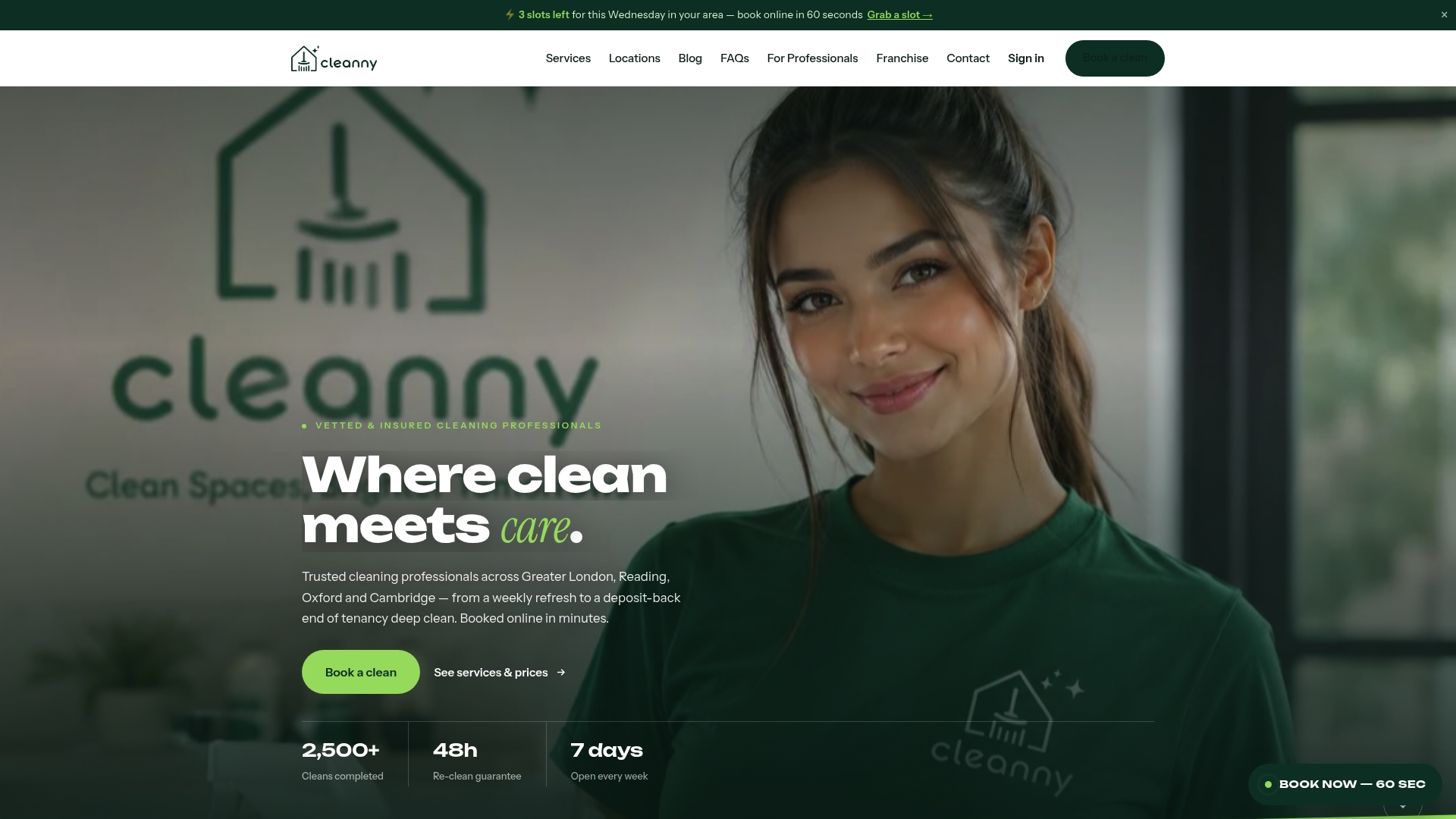
- Instant online booking with upfront pricing, so you know the cost before you commit
- Vetted, insured professionals with eco-friendly product options included
- A re-clean guarantee if a job doesn't meet the standard agreed
- Availability seven days a week, including evenings and weekends
Domestic cleaning starts from £18 per hour, and a one-off deep clean starts from £135. If you're hosting short-term guests, our bedding guide from Roomie Design is worth a look alongside your cleaning schedule. When you're ready, you can book a clean online in a few minutes and expect a confirmation with your assigned team before the first visit.
FAQ
Is cleaning the same as housekeeping?
No, they overlap but aren't the same. Cleaning focuses on specific tasks like hoovering, mopping or a deep clean, while housekeeping covers broader, ongoing household management including laundry, tidying and errands.
What are the seven rules of housekeeping?
There's no single official list, as the "rules" vary by source and household. Common principles include working top to bottom, decluttering before cleaning, tackling one room at a time, using the right product for each surface, maintaining a regular schedule, storing chemicals safely in line with COSHH guidance, and keeping equipment clean between uses.
What should a housekeeper not do?
A housekeeper typically isn't expected to carry out clinical or personal care tasks, major repairs, or specialist jobs like carpet or oven deep cleaning, which usually fall to a dedicated professional. In care settings, GOV.UK guidance draws a clear line between domestic duties and clinical care, which require separate training.
What falls under housekeeping?
Housekeeping generally includes tidying, laundry, bed-making, light organisation and small errands that keep a household running day to day. It doesn't usually include specialist jobs like carpet cleaning or structural maintenance, which are handled as separate, task-specific bookings.
How much does a regular cleaner typically cost?
Pricing varies by provider and location, but regular domestic cleaning is commonly charged by the hour, starting from £18 per hour with some providers. One-off jobs like deep cleans are usually priced as a fixed job instead, starting from £135 depending on property size.