
A professional deep clean is a top-to-bottom reset covering ceilings, walls, and floors, plus everything a routine tidy-up skips: inside ovens, fridges, and cabinets, grout, baseboards, vents, window tracks, and the dust colonies behind and under furniture. Most standard packages include those items as core work. Extras like exterior windows, full wall washing, or carpet steam extraction are usually optional add-ons, so it pays to confirm the exact list before you book.
TL;DR:
- Deep cleaning includes detailed tasks like cleaning inside ovens, scrubbing grout, and behind appliances, typically totaling 30 to 40 individual jobs.
- The scope of what is included varies widely, so verifying the checklist beforehand is essential to ensure it covers your specific needs.
- Costs usually start around £135 for a standard package, with additional charges for extras like carpet steam cleaning or full oven deep cleans.
- Most homes benefit from a deep clean every three to twelve months, depending on household factors such as pets, allergies, or renovations.
- Proper preparation, such as decluttering and securing pets, helps keep the job on time and on budget, while transparent providers include upfront pricing and guarantees.
Table of Contents
- What deep cleaning includes that a regular clean doesn't
- The room-by-room deep cleaning checklist
- What's usually excluded, and what costs extra
- How often to deep clean, and how long it takes
- Getting your home ready for the cleaning crew
- What to check before booking a provider
- When to hire a pro versus doing it yourself
- Ready to book a deep clean that covers everything on this list?
- Sources
- FAQ
What deep cleaning includes that a regular clean doesn't
A regular clean maintains what's already tidy. A deep clean rebuilds the baseline, which is why it takes several times longer and follows a completely different order of operations.
Professional teams work from the top down: ceiling fans, light fixtures, and air vents first, then surfaces, then floors last. That sequence isn't arbitrary. Dust dislodged from a ceiling fan settles downward, so cleaning the floor first would mean redoing it. Working top to bottom means everything displaced during high dusting gets captured by later stages instead of resettling on a freshly wiped counter, a workflow reflected in most professional deep cleaning explainers.
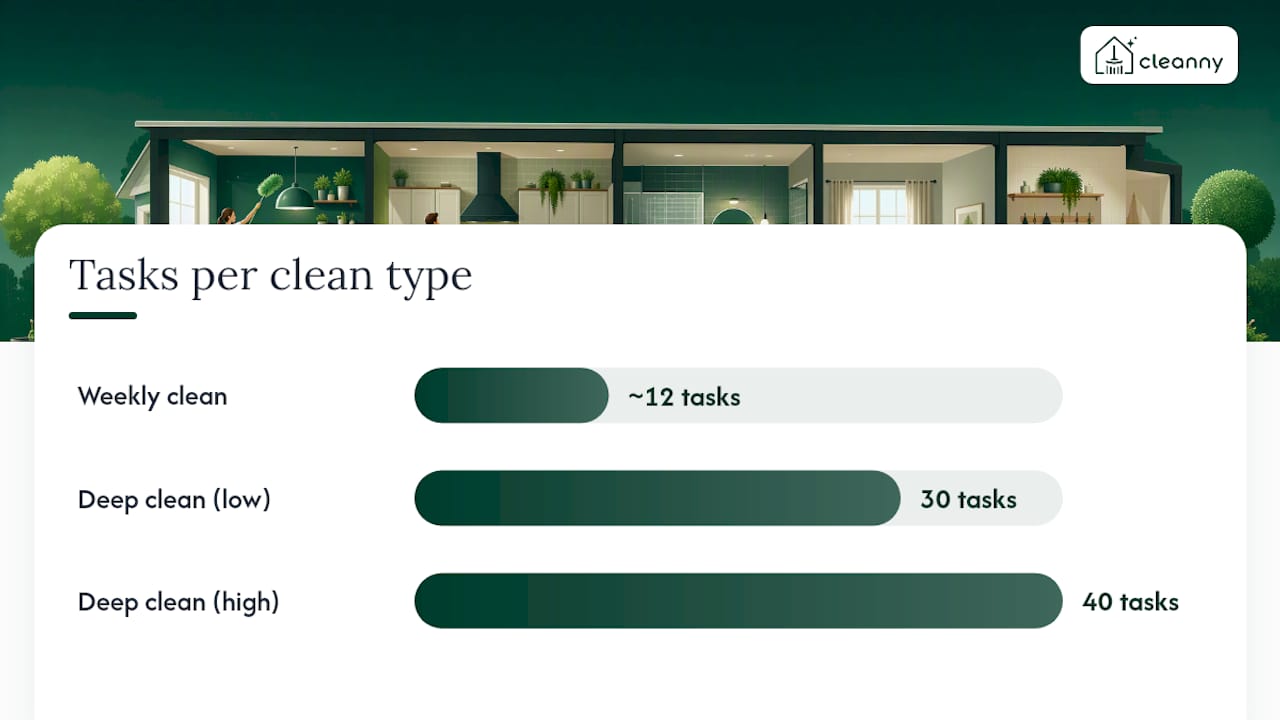
The other defining trait is sheer task volume. A typical thorough deep clean runs to roughly 30 to 40 individual, detailed tasks across a home, compared with perhaps a dozen recurring tasks in a weekly visit. That gap is the whole point: a deep clean is designed to happen occasionally and reset the property, while regular cleaning maintains that reset in between.
Tasks that mark a clean as "deep" rather than routine typically include:
- Cleaning inside ovens, extractor fans, and fridge interiors
- Scrubbing grout lines and descaling tiled surfaces
- Wiping baseboards, skirting boards, and door frames
- Removing and cleaning vent covers and light fittings
- Moving furniture to clean underneath and behind it
- Cleaning interior window glass and window tracks
None of that happens in a standard weekly visit, which focuses on visible surfaces, floors, and bathrooms rather than the accumulated grime in appliances and fixtures.
The room-by-room deep cleaning checklist
Knowing the individual tasks matters less than knowing where they apply. A written, room-by-room breakdown is the clearest way to check whether a provider's "deep clean" matches what you actually need, and it's the same structure most professional checklists follow, as seen in public room-by-room service breakdowns.
Pro Tip: Before comparing quotes, ask each provider for their checklist in writing. Two companies can call very different scopes of work "a deep clean," and the only way to compare like for like is to see the list side by side.
-
Kitchen. Interior oven cleaning, degreasing the rangehood and extractor filters, wiping down cabinet fronts and handles, cleaning inside the microwave, descaling the kettle and taps, wiping splashbacks, and pulling out accessible appliances to clean behind and underneath them. Fridge interiors are cleaned where accessible and usually only if emptied in advance.
-
Bathroom. Scrubbing grout and sealant lines, descaling showerheads and taps, cleaning inside and behind the toilet, wiping down extractor fan covers, clearing shower door tracks of limescale and hair, and disinfecting all tiled surfaces rather than just wiping them.
-
Living areas and bedrooms. Dusting and wiping baseboards, cleaning blinds slat by slat, vacuuming and wiping window tracks, dusting ceiling fans and light fittings, moving sofas and beds to clean underneath, and vacuuming upholstery including cushions and crevices.
-
Whole-home tasks. Removing cobwebs from corners and ceilings, wiping switch plates and door handles, cleaning interior window glass, dusting vent covers throughout, and edging floors where a vacuum or mop typically misses.
A few items on that list sit in a grey area. Full fridge interiors, upper-floor interior windows, and anything requiring specialist equipment (like a proper carpet steam clean) are commonly offered as optional add-ons rather than baked into the base price. If a quote looks unusually cheap, that's often why: the core rooms are covered, but the specialist extras aren't.
What's usually excluded, and what costs extra
Base deep cleans stop short of a handful of jobs that either need specialist kit or fall outside general cleaning altogether. Typical exclusions include exterior window cleaning, full wall washing (as opposed to spot cleaning), carpet steam extraction, laundry or home organisation, and structural mould remediation, which is a job for a specialist, not a cleaning crew.
Common paid add-ons include:
- Carpet or upholstery steam cleaning
- Full interior oven deep clean (as opposed to a quick wipe)
- Emptying and cleaning the entire fridge or freezer
- Interior window cleaning on upper floors or hard-to-reach windows
Because providers define the base package differently, industry commentary consistently urges the same thing: confirm exactly what's included before booking. Ask for an itemised quote rather than a single lump figure. It's the fastest way to spot which specialist tasks are missing from the headline price.
How often to deep clean, and how long it takes
Most homes benefit from a deep clean every three to twelve months, and the right frequency depends on the household rather than a fixed rule. Households with pets, allergy sufferers, or young children often lean towards the shorter end of that range, closer to seasonal (every three months). Others manage well with an annual reset, topped up with event-driven cleans around a house move, a renovation, or a big life change. Professional guidance generally lands on every six to twelve months as the sensible middle ground.
Time on site depends heavily on property size and condition. A one-bedroom flat that's already reasonably maintained might take a small team a few hours; a larger family home, or a property that hasn't been deep cleaned in years, can take considerably longer. Neglected properties always take longer, because the grime layers are thicker and tasks like descaling or degreasing take real scrubbing time rather than a quick wipe.
On cost, the UK market for deep cleaning generally reports hourly rates in the mid £20s to £30s, with full-home jobs often running several hours depending on size and condition. Deep cleaning services start from a set one-off project rate, with final prices varying according to size, condition, and add-ons selected. If you want an accurate figure rather than a rough estimate, ask for a photo-based or in-person assessment. It's the only reliable way to price in things like a neglected oven or a heavily soiled carpet before the day itself.
Getting your home ready for the cleaning crew
A little preparation goes a long way toward keeping the job on time and on budget. Cleaners need clear access to baseboards, corners, and under-furniture areas, so clearing floors and surfaces beforehand matters more than most people expect.
- Clear clutter from floors, countertops, and furniture tops
- Move fragile or valuable items somewhere safe and out of the way
- Secure pets in another room or arrange for them to be elsewhere
- Flag any existing stains, damage, or problem areas in advance
- Empty the fridge if interior cleaning is part of your booking
- Confirm parking and access instructions, especially for flats
Pro Tip: If you're short on time, prioritise decluttering the kitchen and any room with a lot of surface items. Cleaning teams lose the most time moving things out of the way, not cleaning around them, and that lost time often shows up as extra charges on the invoice.
These steps aren't just courtesy. A tidy, accessible home genuinely speeds up the job, which keeps hourly-rate jobs shorter and reduces the chance of a provider quoting extra time on the day.
What to check before booking a provider
Because "deep clean" means different things to different companies, the features that actually protect you as a customer are the ones you can verify before you pay anything. Cleanny's approach is built around exactly that kind of transparency:
- Online booking with upfront pricing shown before you confirm
- Vetted, background-checked cleaning professionals
- Eco-friendly cleaning products included as standard
- A re-clean guarantee if something's missed
- Coverage across Greater London, Reading, Oxford, and Cambridge
Those features matter because they turn a vague promise into something checkable. Upfront pricing means you're not negotiating extras after the crew has already started. A re-clean guarantee means the checklist isn't just marketing copy, since there's a remedy if something on it gets skipped.
Before confirming any booking, whether with Cleanny or another provider, match the service page against the room-by-room checklist above. If oven interiors, grout, or vents aren't explicitly listed, ask directly rather than assuming they're included.
When to hire a pro versus doing it yourself
Some jobs genuinely need a professional crew: moving into or out of a property, cleaning after building work, or resetting a home for someone with allergies. These situations demand the full 30 to 40 task sweep in one go, and doing that alone over a weekend is a bigger job than most people expect.
Other times, splitting the work makes more sense. If your regular cleaning is already solid but your carpets are overdue or your oven has become a project of its own, book those as standalone specialist jobs rather than paying for a full deep clean you don't need. What I'd push back on is the instinct to DIY the whole list to save money. The parts people skip, like descaling behind taps or clearing extractor filters, are exactly the parts that cause damp, mould, or appliance wear if left too long. A professional job done properly once tends to outlast a rushed DIY attempt by months.
— CLEANNY
Ready to book a deep clean that covers everything on this list?
Deep cleaning services are priced from a base rate, with the full scope shown before payment, so there's no guessing what's included once the crew arrives. Cleaners are vetted professionals who use eco-friendly products, and a re-clean guarantee is offered if any checklist items are missed.

Before you book, check the deep cleaning service page for exactly which tasks are included and which, like carpet steam cleaning or full oven interiors, sit as add-ons. If your job includes carpets specifically, that's a separate specialist service worth adding at the same time rather than booking twice. Once you know what you need, get an instant quote and book online in a few minutes, with availability across Greater London, Reading, Oxford, and Cambridge.
Sources
- House cleaning service in the UK | Grant a Smile
- House deep cleaning prices: Average UK costs for 2026 | Checkatrade
- Care
- What is included in a deep cleaning? (Full checklist) | Capital Clean Care
FAQ
What should a deep clean involve?
A deep clean should cover all standard maintenance tasks plus specialised work: inside ovens and fridges, grout scrubbing, baseboards, vents, window tracks, and cleaning behind and under furniture. In most homes that adds up to roughly 30 to 40 individual tasks.
How much should I expect to pay for a deep clean?
UK pricing typically sits in the mid £20s to £30s per hour, with full-home jobs often running several hours depending on size and condition. Cleanny's deep cleaning starts from £135 as a one-off project rate, shown upfront before booking.
What are the main stages of an effective deep clean?
Professional teams generally work top to bottom and room by room: high dusting and vents first, then surfaces and appliances, then floors and edges last, so displaced dust gets captured rather than resettling on cleaned areas.
How long does a deep cleaning usually take?
Time depends on property size and condition rather than a fixed figure. A well-maintained flat takes noticeably less time than a larger or neglected property, since thicker grime and more surface area both add hours to the job.
How often should I book a deep clean?
Most professional guidance suggests every six to twelve months, with some households opting for a seasonal schedule every three months if they have pets, allergies, or young children.