
A pre-sale clean is worth doing for most sellers. It sharpens listing photos, reassures buyers within seconds of walking through the door, and cuts down the small doubts that stall offers. Whether you tackle it yourself or book a professional such as Cleanny, the goal is the same: a house that photographs well and feels cared for.
TL;DR:
- A pre-sale house clean should specifically target visible surfaces, fixtures, and access points that influence first impressions and listing photos.
- Scheduling the clean immediately before photos and viewings ensures it remains fresh, especially if repairs or decluttering are completed beforehand.
- Professionals are recommended for large or recently renovated homes, homes with pets, or when stains and odors are difficult to remove with DIY efforts.
- Additional costs for extras like carpet extraction, oven cleaning, or exterior pressure-washing can significantly increase the final price, so ask for detailed quotes beforehand.
- A thorough final check from knee height can catch dust and marks invisible from standing, while avoiding masking odors or hiding defects maintains transparency with buyers.
Table of Contents
- What does a pre-sale house cleaning service include?
- What's the best room-by-room pre-sale cleaning checklist?
- When should you schedule the clean before listing?
- DIY or professional pre-sale cleaning: which should you choose?
- How much does a pre-sale house clean cost in the UK?
- What should you finish before the final clean?
- Do you need an EPC as well as a clean house?
- What cleaning mistakes put buyers off?
- Why vetting and guarantees matter when you hire a cleaner
- How Cleanny can handle your pre-sale clean
- Sources
- FAQ
What does a pre-sale house cleaning service include?
Pre-listing cleaning is not the same as a weekly tidy. It targets the spots buyers and camera lenses notice first, and it treats storage and appliances as inspection zones rather than private space. Gov advises making a home look, and smell, clean, tidy and inviting before marketing begins.
A thorough pre-sale deep clean before selling a house usually covers:
- The entrance: front door, doormat area, and the first thing a viewer sees stepping inside
- Kitchen surfaces, hob, extractor, cabinet fronts, and appliance interiors buyers are likely to open
- Bathrooms: grout, sealant, mirrors, and the base of the toilet and shower screen
- Floors throughout, including edges and under furniture where dust collects
- Windows, sills, and window tracks, inside and out where accessible
- Skirtings, door handles, light switches, and light fittings
- Storage: wardrobes, cupboards, and the garage or shed if buyers are likely to look
Add-ons that often matter for a listing include carpet extraction, an exterior pressure-wash for driveways and patios, and upholstery cleaning if the sofa has seen better days. These sit apart from maintenance jobs like fixing a dripping tap or a legal requirement like an energy certificate. Cleaning improves how a house presents; it does not replace fixing or disclosing anything that is actually wrong with the property.
What's the best room-by-room pre-sale cleaning checklist?
Work through the house in the order a viewer would experience it, then finish with a walkthrough that checks the details a camera catches.
- Entry. Wipe the front door, clean the letterbox, polish the handle, and check the threshold. This is the first sightline in every listing photo.
- Kitchen. Degrease the hob, clean inside and outside the extractor, wipe cabinet fronts and handles, and clean the fridge and oven interior if either is likely to be opened during viewings.
- Bathrooms. Descale taps and shower heads, get into grout lines with a proper brush, leave mirrors streak-free, and check behind the toilet and under the sink pedestal.
- Living spaces and bedrooms. Dust high surfaces first (light fittings, picture frames, wardrobe tops), vacuum right into the edges and skirting boards, tidy any visible storage, and remove anything too personal or too cluttered for staging.
- Exterior and kerb appeal. Sweep the porch, clear the path, and tidy access to the shed or garage if it forms part of the viewing route.
- Final walk-through. Crouch down and check buyer-height and camera-angle spots: under cabinet lips, window tracks, and skirtings low to the floor.
Pro Tip: Photographers shoot wide angles low to the floor, which catches dust and marks a standing eye-level check misses. Do your final pass on your knees, not on your feet.
Cleaners handling a pre-sale job commonly treat entrance, kitchen, bathrooms, floors, and odour sources as the non-negotiables, with appliance interiors added whenever buyers are expected to inspect them.
When should you schedule the clean before listing?
Timing decides whether the clean actually holds up for photos and viewings. Finish structural work first: repairs, painting, and decluttering all create dust, and cleaning before that work is finished means doing it twice.
- Complete repairs and decluttering before any cleaning starts
- Book the pre-sale clean for the day or two immediately before listing photos are taken
- If you're still living in the property, plan quick touch-up refreshes ahead of the first open house and any heavy-viewing weeks
- If the property is vacant, one thorough clean before photos is usually enough, but check for dust resettling if any tradespeople return afterwards
An energy performance certificate has to be commissioned and made available before you can market the property. It sits entirely outside the cleaning schedule; sort it in parallel, not as part of the same to-do list.
DIY or professional pre-sale cleaning: which should you choose?
The right choice comes down to time, scale, and how much risk you're willing to carry.
A small, well-kept flat that's been lived in tidily rarely needs more than a thorough weekend of DIY effort, with maybe a carpet cleaner hired for a day. A larger house, a property that's just come through a renovation, or a home with pets and years of accumulated grime is a different job entirely. Professionals bring equipment for carpets, steam cleaning for grout and upholstery, and specialist products for stains and odours that supermarket sprays won't shift. They also compress a two-day DIY slog into a few hours, which matters when your photographer is booked for Thursday.
- Go DIY when: the property is small, already tidy, and you have a free weekend before photos
- Hire professionals when: the house is large, recently renovated, has pets, or has stains and odours you can't fully remove yourself
- Either way, get scope in writing: confirm exactly what's included, whether appliance interiors and add-ons like carpet cleaning are covered, and check insurance and cancellation terms before booking
Pro Tip: Ask any cleaner, in writing, what happens if a mark doesn't come out. A re-clean guarantee or clear re-treatment policy saves an argument later.
How much does a pre-sale house clean cost in the UK?
Budget realistically and you won't be caught out by add-ons that inflate a quote after the fact. A UK cleaning cost guide puts independent cleaners at around £25 per hour, and agencies at £25 to £30 per hour, which means a typical three-hour booking often lands around £75 to £90 before extras. Cleanny's own deep cleaning service starts from £135 one-off, reflecting the extra time a full pre-sale job takes over a routine tidy.
Certain extras reliably push the price up:
- Carpet extraction, priced separately from a standard clean
- Oven interiors, which take longer and often need stronger degreasers
- External pressure-washing for driveways, patios, or render
Ask for an itemised quote rather than a single flat figure. Fixed-scope pricing, with add-ons listed separately, makes it far easier to compare one quote against another and to see exactly what you're paying for.
What should you finish before the final clean?
Do this in order, and the final clean will actually stick rather than getting undone by the next task on your list.
- Pack away excess possessions and depersonalise rooms so surfaces are genuinely clear, not just tidied around.
- Finish small repairs and any touch-up paint before the cleaner arrives, so plaster dust and paint splashes don't force a repeat visit.
- Track down the source of any odour, whether that's a bin, a damp cupboard, or a pet bed, and treat it directly rather than reaching for an air freshener. A neutral-smelling house reads as clean; a heavily scented one raises questions.
Clearing storage selectively matters too: buyers open wardrobes and under-sink cupboards, so an overstuffed cupboard undoes a spotless kitchen counter two feet away.
Do you need an EPC as well as a clean house?
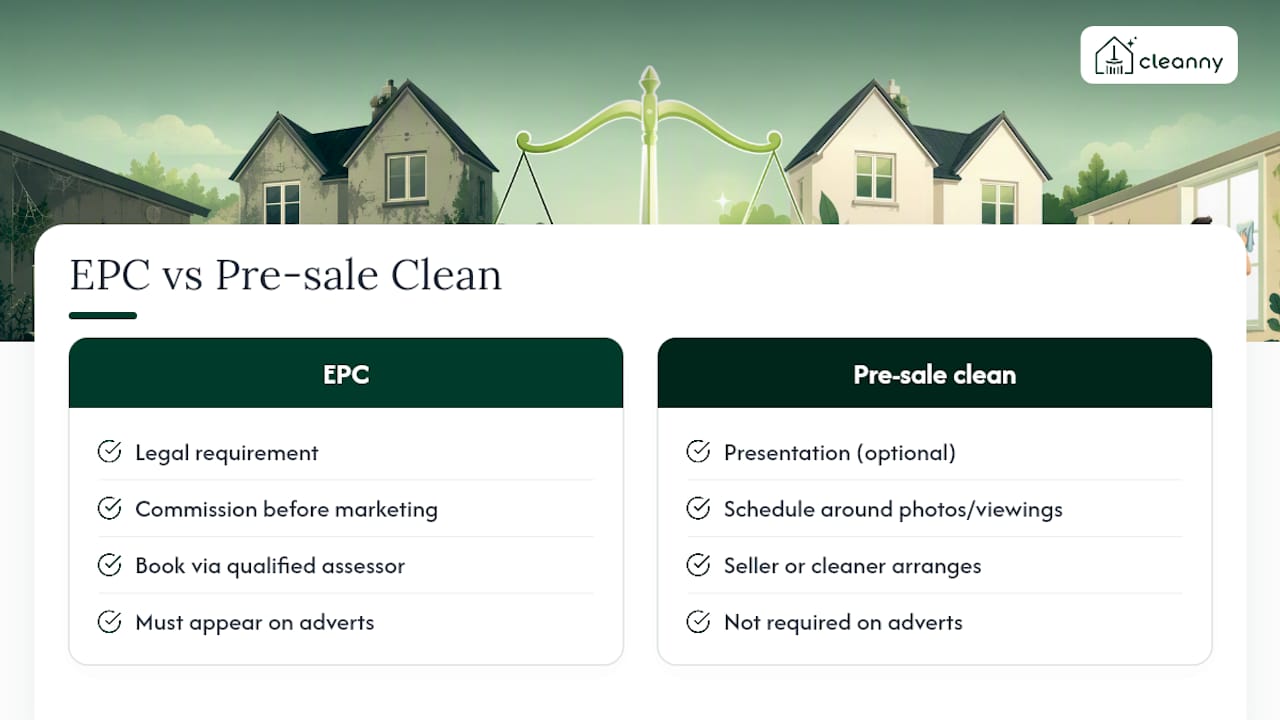
Yes, and it's worth being clear that these are two completely separate requirements. A pre-sale clean is presentation. It makes rooms look and feel better, and it's entirely optional, though strongly advisable. An Energy Performance Certificate is a legal requirement, not a presentation choice.
If your property doesn't already have a valid EPC, one must be commissioned before you start marketing it. The energy performance indicator also has to appear on property adverts once it's available. None of this has anything to do with how clean your skirting boards are, and no amount of deep cleaning substitutes for having a valid certificate in place.
Sellers sometimes conflate the two because both get sorted around the same time, in the run-up to listing. Treat them as parallel tasks with separate owners: book your EPC assessment through a qualified assessor as soon as you decide to sell, and schedule your cleaning around your photo and viewing dates. Missing the EPC can delay marketing altogether; missing a good clean just costs you weaker first impressions. One is a legal box to tick, the other is a presentation lever you pull to sell faster, and often for more.
What cleaning mistakes put buyers off?
A handful of mistakes crop up again and again, and most are avoidable once you know to look for them.
Masking odours instead of removing their source is the biggest one. A heavy blast of air freshener over a musty bathroom or a pet smell tends to make buyers suspicious rather than reassured, because it signals there's something being covered up. Track the source and clean it properly instead.
Cleaning before repairs and decluttering are finished is another common error. Dust from a half-finished painting job settles straight back onto surfaces you've just wiped down, and you end up paying for the same clean twice.
Overlooking storage is a quieter but equally damaging mistake. Buyers open wardrobes, kitchen cupboards, and under-sink units, so a chaotic cupboard behind a pristine kitchen door creates a jarring, negative impression right when confidence should be building.
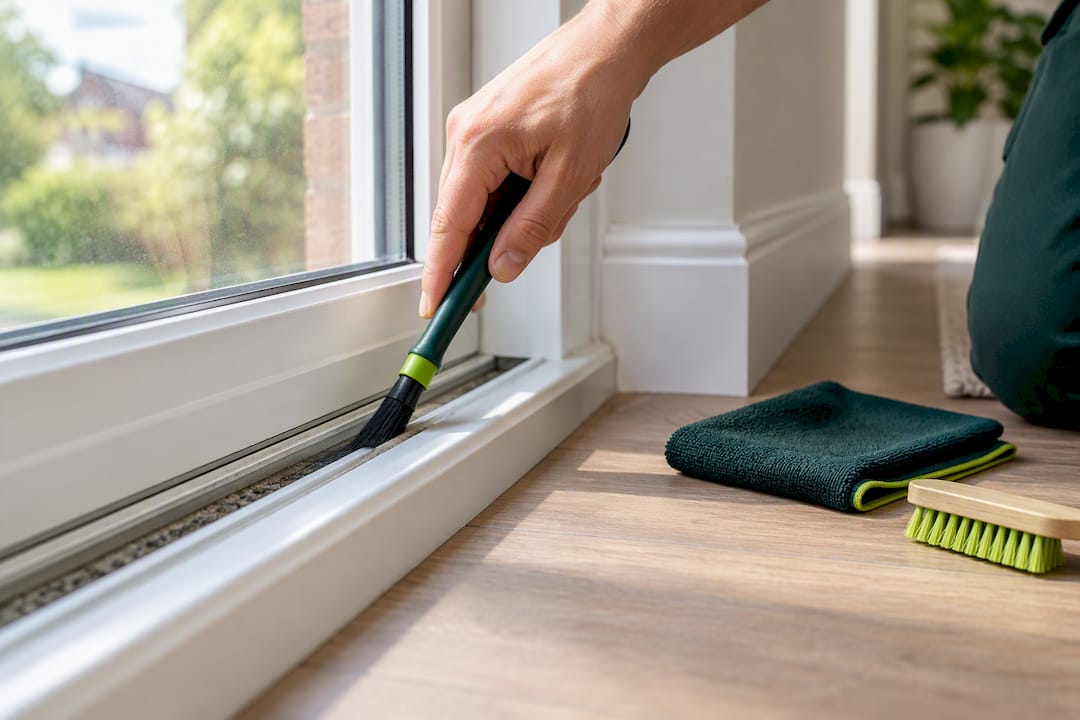
Ignoring low, hidden zones is the one photographers catch every time: window tracks, skirtings, and the base of the toilet. These sit outside normal eye-level cleaning but show up clearly in wide-angle listing photos and during a buyer's slower, closer inspection on a second viewing.
Finally, some sellers try to disguise a genuine defect with a fresh coat of paint or a strategic rug rather than disclosing it. GOV.UK is explicit that presentation should never be used to hide a material fault, and buyers who feel misled at survey stage tend to walk away entirely.
Why vetting and guarantees matter when you hire a cleaner
Booking a stranger into your home during a stressful sale is a leap of trust, which is exactly why the details matter. A platform that shows upfront pricing before you book, vets its cleaners with background checks, and backs the job with a re-clean guarantee removes most of the risk that usually comes with hiring casually.
Before you book anyone, ask for the scope in writing, confirm whether supplies and any add-ons are included, and check what happens if a re-clean is needed. These three questions catch almost every dispute before it starts.
— CLEANNY
How Cleanny can handle your pre-sale clean
If you'd rather hand the job to someone else entirely, some cleaning services give you upfront pricing before you book, so there's no guessing what the final bill looks like once add-ons are factored in.

For a pre-sale job, most sellers start with Deep Home Cleaning, which covers the priority zones this guide runs through: kitchen, bathrooms, floors, and the details a camera catches. If the property's just come off a renovation, After Builders Cleaning clears the dust and debris that a standard clean isn't built for, and Carpet Cleaning or Upholstery Cleaning can be added where stains or odours need proper extraction rather than a surface wipe.
Before booking, confirm the scope, ask what's included versus what counts as an add-on, and book the date around your photographer, not the other way round. Many cleaning jobs come with a re-clean guarantee, so if something's missed, it gets sorted rather than argued over. Full pricing and service details sit on the services page, or you can book a clean online directly and pick a slot that fits your listing timeline.
FAQ
Should a house be cleaned before selling?
Yes. A clean, well-presented house tends to photograph better and reassure buyers faster, and GOV.UK's own seller guidance recommends making a home look, feel and smell clean and inviting before marketing starts. Cleaning is presentation, not a substitute for disclosing any genuine defects.
What is the 5-5-5 rule for cleaning?
There's no official UK standard called the "5-5-5 rule" for pre-sale cleaning. It's an informal shorthand some people use for quick, timed reset tasks, so treat any version you come across as a rough personal routine rather than an industry benchmark.
How much does a cleaner cost for 3 hours?
A three-hour booking typically works out around £75 to £90 before specialist extras, based on independent rates of roughly £25 an hour and agency rates closer to £25 to £30 an hour. Cleanny's deep cleaning service starts from £135 for a one-off job, reflecting the extra scope a pre-sale clean covers.
How much is a 1 hour clean?
Based on the same UK market guidance, an hour of cleaning generally costs around £25 to £30, depending on whether you book an independent cleaner or an agency. For Domestic Cleaning through Cleanny, rates start from £18 per hour, with exact pricing shown before you confirm a booking.