
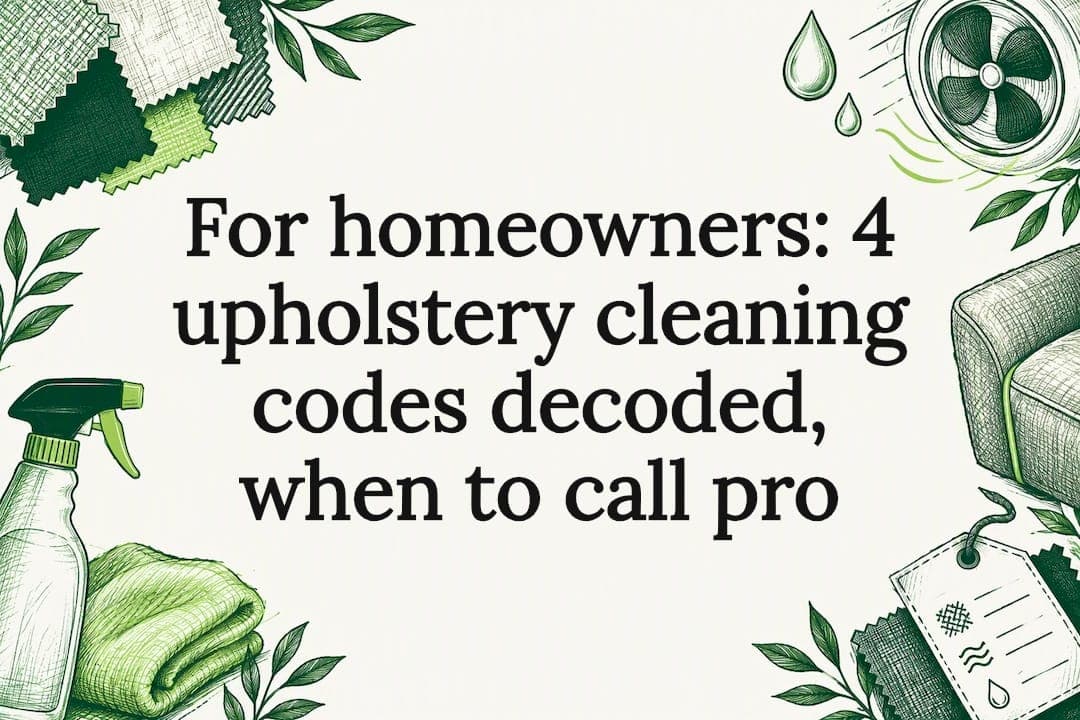
Upholstery cleaning codes are manufacturer guidance stitched onto a tag, telling you whether water, solvent, either, or no wet cleaning at all is safe for that fabric. W means use a water-based cleaner, S means solvent only, SW (or W-S) means either works, and X means vacuum only, no liquids. These letters are a starting point, not a guarantee, so bodies like the IICRC still recommend testing the fabric before you touch it with anything, and a service such as Cleanny exists for the cases where that test says stop.
TL;DR:
- Fabrics with a W code tolerate water-based cleaning, but testing a hidden patch first is essential to prevent damage.
- S-coded fabrics require solvent cleaning and should never be exposed to water, which can cause shrinking or staining.
- Natural fiber or treated fabrics often react unpredictably, so professional testing is crucial before any cleaning attempt.
- For X-coded fabrics, only vacuuming and light brushing are safe; any liquid cleaning should be left to professionals.
- Always check your furniture's tag in hidden spots and perform spot tests to avoid permanent stains or damage.
Table of Contents
- What the common upholstery cleaning codes mean
- Where to find your fabric's cleaning code and how to test it
- How to clean upholstery safely, by code
- Why natural fibres and treated fabrics behave unpredictably
- When to call a professional upholstery cleaner
- Small habits that keep upholstery cleaner for longer
- How Cleanny's upholstery cleaning service can help
- Where to read more on upholstery care standards
- Sources
- FAQ
What the common upholstery cleaning codes mean
Each letter refers to the chemistry a fabric can tolerate, not a cleaning brand or a specific product. Manufacturers assign the code based on how the fibre, dye and backing react to moisture and solvents during production testing.
- W: water-based cleaning is permitted, using mild detergent foam or a water-based upholstery spotter.
- S: solvent only. Water can shrink, stain or distort the fabric, so cleaners rely on dry-cleaning solvents or solvent-based spot removers instead.
- SW or W-S: both water-based and solvent cleaning are acceptable, though gentler is always safer, and a spot test still matters.
- X: no liquid cleaning at all. Vacuuming and light brushing are the only sanctioned methods, and stains need a professional.
Solvent-coded fabrics tend to be delicate weaves, natural blends or pieces with finishes that water would loosen or discolour. You will also see local variants such as F for foam-specific cleaners or D for dry-clean only, and these appear inconsistently across manufacturer literature, so treat them as background clues rather than fixed rules. The IICRC S300 standard notes that these codes indicate broadly compatible chemistry, but professionals are still expected to test suitability before applying any method.
Where to find your fabric's cleaning code and how to test it
The tag usually sits somewhere you would not normally look during daily use.
- Check under loose seat cushions, along the base seam, or inside a zip lining on the underside of the sofa.
- If there is no tag, look at the fibre content label instead; a mostly synthetic weave often tolerates water better than a natural fibre blend, but this is a clue, not a substitute for testing.
- Choose a hidden patch, such as the back of an arm or underside of a cushion, and apply a small amount of diluted cleaning solution with a clean cloth.
- Blot gently, then leave the area for a day and check for colour change, shrinkage or texture change before treating the visible area.
How to clean upholstery safely, by code
Matching your method to the code reduces the odds of a small mark becoming a permanent one.
For W-coded fabric, mix a small amount of pH-neutral detergent with water, or use a dedicated foam upholstery cleaner. Apply sparingly with a cloth, blot rather than scrub, and avoid soaking the fabric since excess moisture can seep into the padding and cause mildew or browning. Dry the area quickly with a fan or open window.

For S-coded fabric, use a solvent-based upholstery spotter designed for that purpose, work in a ventilated room, and follow the product's instructions closely. Never introduce water, even to rinse, since that is the exact combination the code is warning against.
For SW or W-S fabric, start with the gentlest method that works, usually a water-based approach with light blotting, and always spot test first. A low-moisture technique is worth considering if the fabric feels delicate or the piece is older.
For X-coded fabric, stick to surface care: a soft brush attachment and low-suction vacuum lift dust and debris without introducing any liquid. Anything beyond that belongs to a professional.
- Microfibre cloths for blotting and light wiping.
- Blotting paper or clean white towels to draw out moisture without spreading a stain.
- A soft-bristle brush attachment for loosening dust before vacuuming.
- A low-suction vacuum setting and a drying fan to speed up airflow after any wet treatment.
Pro Tip: Always blot from the outside of a stain inward. Working outside-in stops the mark from spreading further across the fabric.
Why natural fibres and treated fabrics behave unpredictably
Two sofas with the same code can still respond differently to the same cleaning method, and that inconsistency is what causes most DIY mishaps.
Natural fibres can brown, bleed, shrink or change texture even when labelled for water-based cleaning, and technicians are advised to test gently before treating the full piece. IICRC consumer tip sheet
Wool, cotton and linen blends are especially prone to this kind of reaction, since the fibres themselves can wick moisture unevenly and leave a ring or a darker patch behind. Flame-retardant treatments and other chemical finishes add another layer of risk: cleaning a treated fabric with water or solvent can react with the finish and cause staining or colour shifts that have nothing to do with the dirt you were trying to remove. The fibre construction, backing material and age of the piece all influence the outcome, which is why professionals trained to the IICRC S300 standard test every fabric rather than relying on the code alone. If a test patch shows browning, bleeding or a texture change, stop there. Further cleaning is likely to make the damage worse, not better.
When to call a professional upholstery cleaner
Some situations are best handed over before you start rather than after a test patch goes wrong.
- An X code, since it rules out DIY liquid cleaning entirely.
- Widespread staining, pet odours or smoke smell that a spot clean will not reach.
- Any sign of browning, bleeding or shrinkage during your own spot test.
- Natural fibre upholstery such as wool, silk or linen blends, which are more prone to permanent damage.
Ask a prospective cleaner what tests they run before treating the whole piece, what chemicals they plan to use, how long drying will take, and whether a re-clean is included if the result falls short. A cleaner working to the IICRC S300 standard will expect to check fibre type, backing, flame-retardant treatments and colourfastness before starting.
Small habits that keep upholstery cleaner for longer
Regular low-suction vacuuming and blotting spills the moment they happen prevent most stains from ever needing a code-specific fix. Washable covers are worth choosing where the furniture allows it, and a throw over the arms or seat of a heavily used sofa spares the original fabric from daily wear. Fabric protector sprays help repel spills, but they do not remove the underlying chemical risks of the wrong cleaning method, and reapplying protector after any professional clean keeps that layer working.
— CLEANNY
How Cleanny's upholstery cleaning service can help
When a stain or a fabric code makes DIY too risky, a professional upholstery cleaning service gives you a reliable route without the guesswork of matching solvents to fibres yourself. Every job uses vetted, insured technicians and eco-friendly products, backed by a re-clean guarantee if the result does not meet the mark.
- Fabric testing and code assessment before any product touches your sofa or chairs.
- Targeted stain treatment matched to what the fabric can safely tolerate.
- Fast, thorough drying so the room is back in use sooner.
You can book upholstery cleaning online in minutes, or browse the full range of services if you would rather combine it with a wider deep clean of the home.
Where to read more on upholstery care standards

For deeper detail, the IICRC publishes the professional cleaning standard behind most reputable services, WoolSafe covers wool and other sensitive natural fibres, and your furniture's own manufacturer care leaflet remains the most specific source for that exact piece.
FAQ
Where can I find the upholstery cleaning code?
Check under loose seat cushions, along the base seam, or inside a zip lining on the underside of the piece. If there is no tag there, the fibre content label can offer a clue, though it is not a substitute for testing before cleaning.
What does upholstery cleaning code W mean?
Code W means the fabric can be cleaned with water-based products, such as a mild detergent solution or a foam upholstery cleaner. Even so, testing a hidden patch first is still recommended before treating the whole piece, according to the IICRC.
My couch has no cleaning code. What should I do?
Without a code, treat the fabric cautiously: check the fibre content tag for clues, then test a hidden area with a diluted solution and wait to check for colour change or texture change. If anything looks off, or the fabric is a natural fibre blend, it is worth booking a professional rather than guessing further.
What does fabric cleaning code D mean?
Code D generally indicates dry-clean only, meaning no water-based cleaning should be applied. Interpretation of this notation can vary between manufacturers, so checking the specific care leaflet for that piece is the safest way to confirm what it means for your furniture.